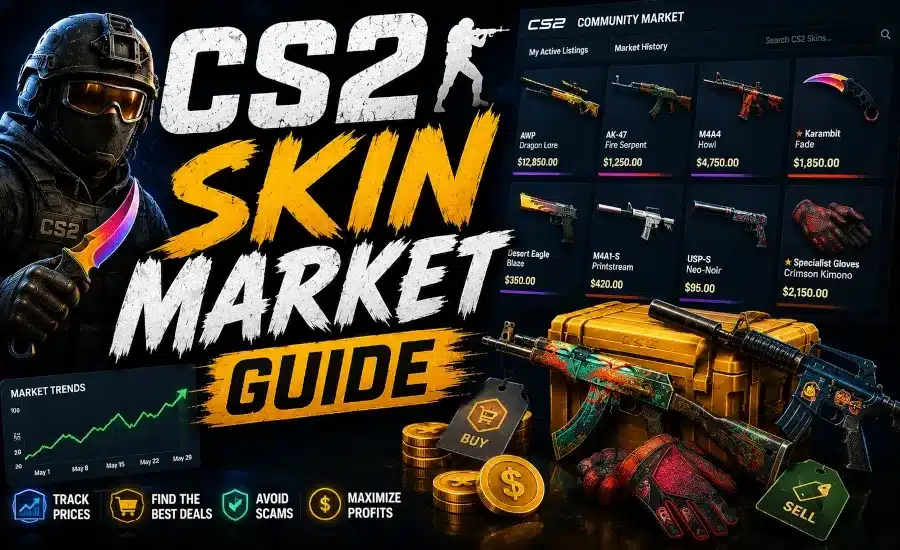
From Inventory to Profit: Mastering the CS2 Skin Market
Counter-Strike 2 isn’t just one of the world’s most popular competitive shootersit’s also home to one of the largest virtual item economies ever created. Every day, millions of skins change hands through the Steam Community Market and trusted third-party marketplaces. For many players, skins are simply cosmetic upgrades that personalize their favorite weapons. For others, they’re digital collectibles, trading assets, or even long-term investments.
Whether you’re buying your first skin or managing an inventory worth thousands of dollars, understanding how the CS2 skin market works is essential. Prices can rise or fall based on rarity, demand, professional esports events, limited collections, and even small details such as float values or pattern variations.
If you’re completely new to Counter-Strike skins, we recommend starting with our comprehensive CS2 Skins hub, where you’ll find beginner-friendly guides, skin rankings, and market insights covering every aspect of the game’s cosmetic economy.
Players interested in trading platforms should also explore our detailed CSGO Trading Sites guide, where we compare the most popular marketplaces, their fees, payment methods, and security features.
Rather than focusing on gambling or case opening, this guide explores the market itselfhow prices are formed, what makes certain skins valuable, and how experienced traders evaluate buying and selling opportunities.
What Is the CS2 Skin Market?
The CS2 skin market refers to the ecosystem where players buy, sell, and trade cosmetic weapon finishes. Although skins don’t affect gameplay or weapon performance, they have become valuable digital assets due to their rarity, appearance, and demand within the community.
Today, there are two main ways to exchange skins:
| Marketplace | Best For |
|---|---|
| Steam Community Market | Safe purchases using Steam Wallet funds |
| Third-party marketplaces | Better prices, cash withdrawals, larger inventories |
While the Steam Community Market is the official option, it only supports Steam Wallet balances and doesn’t allow users to withdraw real money. Because of these limitations, many experienced traders choose third-party CS2 Skin Markets that offer lower fees, additional payment methods, and direct cash withdrawals.
Our CSGO Skins guide explains the differences between official and third-party marketplaces, making it a great starting point for new traders.
Why Do Some CS2 Skins Cost Thousands of Dollars?
One of the most fascinating aspects of the CS2 economy is the enormous price difference between skins.
Some weapon finishes are worth less than one dollar.
Others regularly sell for tens of thousands.
Understanding why requires looking beyond appearance alone.
Several factors influence market value.
Rarity
Every skin belongs to a rarity tier.
Generally speaking, rarer skins are more difficult to obtain and therefore command higher prices.
Higher rarity doesn’t automatically guarantee higher value, but it significantly influences long-term demand.
Collection Availability
Many expensive skins come from discontinued collections.
Once a collection stops dropping, the number of available skins gradually decreases as accounts become inactive or items disappear from circulation.
This limited supply often pushes prices higher over time.
Float Value
Every skin receives a unique float value ranging from 0.00 to 1.00.
This number determines the skin’s wear level:
| Float Range | Exterior |
|---|---|
| 0.000.07 | Factory New |
| 0.070.15 | Minimal Wear |
| 0.150.38 | Field-Tested |
| 0.380.45 | Well-Worn |
| 0.451.00 | Battle-Scarred |
Even two identical skins can have dramatically different prices if one has a significantly lower float.
Pattern Variations
Some skins become valuable because of unique pattern templates rather than rarity alone.
Popular examples include:
- Blue Gem Case Hardened
- Doppler Phase Variants
- Marble Fade Patterns
- Crimson Web Centered Webs
Experienced collectors often pay substantial premiums for highly desirable pattern combinations.
Professional Esports Influence
Major Counter-Strike tournaments frequently affect market prices.
When professional players showcase specific skins during high-profile matches, demand can increase rapidly.
Similarly, sticker capsules released during Majors often influence the value of older collections and crafts.
Players interested in the competitive side of Counter-Strike should also read our CSGO Betting guide, where we cover the professional scene and explain why major tournaments often have a noticeable impact on the skin economy.
Market Insight
Unlike traditional video game cosmetics, CS2 skins exist within a player-driven economy where supply and demand constantly influence prices. Understanding these market dynamics is often more important than simply chasing the rarest items.
Best Places to Buy, Sell, and Trade in CS2 Skin Market
Whether you’re building your first inventory or managing a collection worth thousands of dollars, choosing the right marketplace is one of the most important decisions you’ll make.
While the Steam Community Market remains the official platform for buying and selling skins, it isn’t always the most cost-effective option. Over the years, a wide range of third-party marketplaces has emerged, offering lower fees, larger inventories, cash withdrawals, and more flexible payment methods.
The best choice depends on your goals. Some players prioritize safety, while others focus on getting the best possible prices or the fastest withdrawals.
Steam Community Market vs Third-Party CS2 Skin Markets
Many beginners assume the Steam Community Market is always the best option simply because it’s operated by Valve. While it’s certainly the safest place to purchase skins using your Steam Wallet, it also comes with several limitations that experienced traders should understand.
| Feature | Steam Market | Third-Party Marketplaces |
|---|---|---|
| Official Valve Platform | ✅ | ❌ |
| Cash Withdrawals | ❌ | ✅ |
| Steam Wallet Payments | ✅ | ❌ |
| Crypto Payments | ❌ | Many platforms |
| Lower Fees | ❌ | Usually |
| Larger Inventory | Limited | Usually Better |
| International Payment Methods | Limited | Wide Selection |
One of the biggest disadvantages of the Steam Community Market is that money earned from selling skins remains locked inside your Steam Wallet. Those funds can only be spent on Steam products and cannot be withdrawn as cash.
Because of this limitation, many experienced traders choose specialized marketplaces that support bank transfers, PayPal, cryptocurrency, and other payment options.
Best Marketplaces for Buying and Selling in CS2 Skin Market
Several CS2 Skin Markets have established strong reputations within the Counter-Strike community by offering secure trading systems, competitive pricing, and transparent fee structures.
Skinport
For many players, Skinport is one of the easiest places to sell and buy CS2 csgo Skins. The platform offers a large inventory, straightforward pricing, and supports direct cash withdrawals in many regions.
Whether you’re searching for budget-friendly skins or premium knives, Skinport provides an accessible CS2 Skin Market for both casual players and experienced collectors.
CS.MONEY
CS.MONEY has been part of the Counter-Strike trading ecosystem for years.
Unlike traditional CS2 Skin Markets, it focuses heavily on instant trading, allowing users to exchange ingame items directly rather than waiting for buyers.
This makes it particularly attractive for players who frequently upgrade or change their inventory.
Players looking for cryptocurrency payments often consider Waxpeer.
The platform supports modern payment methods while providing competitive pricing and a growing CS2 Skin Market.
It’s especially popular among users who prefer blockchain-based transactions.
SkinsCash
Unlike traditional trading platforms, SkinsCash focuses on quick skin sales.
Instead of waiting for another buyer, users sell directly to the platform, making it an attractive option for players who prioritize speed over maximizing profit.
iTrade.gg
Experienced traders looking for additional CS2 Skin Market options should also compare iTrade.gg, particularly if they regularly manage larger inventories.
Comparing multiple CS2 Skin Markets often results in better pricing opportunities and lower transaction costs.
How Experienced Traders Value Skins
One of the biggest mistakes beginners make is assuming that two skins with the same name always have the same value.
In reality, experienced traders evaluate several characteristics before making a purchase.
These include:
- Float value
- Pattern index
- Sticker combinations
- Trade history
- Collection rarity
- Market demand
- Liquidity
- Recent sales data
Ignoring any of these factors can lead to overpaying for a skinor selling one below its actual market value.
Understanding Market Liquidity
Not every expensive skin is easy to sell.
Liquidity refers to how quickly an item can be converted into cash without significantly lowering its price.
For example:
| Skin Type | Liquidity |
|---|---|
| AK-47 Redline | ⭐⭐⭐⭐⭐ |
| AWP Asiimov | ⭐⭐⭐⭐⭐ |
| Karambit Doppler | ⭐⭐⭐⭐ |
| Blue Gem Case Hardened | ⭐⭐ |
| Souvenir Skins | ⭐⭐ |
Highly liquid skins usually attract more buyers, making them easier to sell quickly.
Rare collector items often require patience, as the number of potential buyers is much smaller.
Common Mistakes New Traders Make
The CS2 skin market rewards patience and research.
Unfortunately, many new traders make avoidable mistakes that reduce their profits.
Buying Based on Hype
Prices often spike immediately after a professional player uses a particular skin during a Major tournament.
Many inexperienced traders buy during these peaks, only to see prices fall weeks later.
Instead, analyze long-term demand rather than reacting to short-term trends.
Ignoring CS2 Skin Market Fees
Different CS2 Skin Markets charge different commission rates.
A skin listed for the same price on two websites may generate different profits after fees are deducted.
Always compare:
- Selling fees
- Withdrawal fees
- Currency conversion costs
- Payment processing fees
Not Comparing Multiple Platforms
Never purchase the first listing you find.
Professional traders often compare prices across several CS2 Skin Markets before completing a transaction.
Even small percentage differences become significant when buying expensive knives or gloves.
Falling for Scams
Unfortunately, Counter-Strike trading remains a popular target for scammers.
Common scams include:
- Fake Steam login pages
- API scams
- Impersonation accounts
- Fake middlemen
- Fake CS2 Skin Market websites
- Fraudulent trade bots
Always verify website URLs before logging into Steam and never share your Steam Guard codes with anyone.
Expert Tip
Before purchasing an expensive knife, compare prices on Skinport, CS.MONEY, and Waxpeer first.
Many traders save hundreds of dollars simply by checking multiple CS2 Skin Markets instead of buying from the first listing they see.
📊 Pro Comparison
| Marketplace | Best For | Crypto | Instant Sell | Cash Withdrawal |
|---|---|---|---|---|
| Skinport | Beginners | ❌ | ❌ | ✅ |
| CS.MONEY | Trading | ❌ | ✅ | Limited |
| Waxpeer | Crypto Users | ✅ | ❌ | ✅ |
| SkinsCash | Fast Sales | ❌ | ✅ | ✅ |
| Steam Market | Safe Purchases | ❌ | ❌ | ❌ |
Can You Make Money Trading CS2 Skins?
One of the most common questions new players ask is whether it’s actually possible to make money by trading Counter-Strike 2 skins.
The short answer is yesbut only if you understand how the market works and accept that prices can move in both directions.
Unlike traditional investments, CS2 skins are digital collectibles. Their value depends almost entirely on supply, demand, rarity, and community interest. There are no guaranteed returns, and even experienced traders can make costly mistakes.
Successful traders rarely rely on luck. Instead, they spend time researching the market, comparing prices across multiple CS2 Skin Markets, and monitoring changes caused by updates, esports events, and community trends.
If your primary goal is to earn money rather than gamble, we recommend reading our CSGO Earning Sites guide, which explores legitimate ways to earn through gaming platforms and reward systems.
Understanding Supply and Demand
Every market follows the same basic economic principle:
High demand + low supply = higher prices
Low demand + high supply = lower prices
The CS2 skin market is no exception.
Although millions of skins exist, not every item is equally desirable. Players often compete for rare knives, discontinued collections, exclusive souvenir skins, and popular weapon finishes, while common drops remain inexpensive due to their abundant supply.
Understanding this relationship is one of the biggest differences between casual buyers and experienced traders.
Why Supply Changes
Several factors influence how many skins are available on the market.
Discontinued Collections
Once Valve removes a collection from active drops, no new skins enter circulation.
As existing inventories become inactive or items are permanently stored in private collections, the available supply gradually decreases.
This limited availability often contributes to long-term price growth.
Trade Holds
Steam’s trade hold system temporarily limits how quickly newly acquired skins can be traded.
Although this doesn’t reduce total supply, it can temporarily affect market liquidity during periods of increased demand.
Long-Term Collectors
Many high-value inventories remain untouched for years.
Collectors often hold rare knives, souvenir skins, and premium sticker crafts indefinitely, reducing the number of items actively available for purchase.
What Increases Demand?
Supply tells only half the story.
Demand often changes much faster.
Several events can rapidly increase interest in specific skins.
Professional Esports Tournaments
Counter-Strike Majors regularly influence skin prices.
When professional players use particular weapon finishes during high-profile tournaments, demand often rises shortly afterward.
Popular examples include:
- AK-47 skins
- AWP skins
- M4A1-S skins
- USP-S skins
Tournament sticker capsules can also increase interest in older crafts and discontinued collections.
Players following the competitive scene should also explore our CSGO Betting Sites guide, which covers the biggest Counter-Strike tournaments, sportsbooks, and betting markets.
Game Updates
Valve updates occasionally introduce balance changes, graphical improvements, or adjustments to weapon popularity.
When a weapon becomes more popular, demand for its skins often increases as well.
Although predicting these movements is difficult, experienced traders closely monitor official announcements before making major purchases.
Community Trends
Sometimes prices rise simply because a skin becomes fashionable.
A viral YouTube video, Twitch stream, or social media trend can dramatically increase demand for certain items within days.
These movements are often temporary, making it important not to buy solely because of short-term hype.
Which Skins Hold Their Value Best?
Not every skin performs equally over time.
Historically, certain categories have remained more stable than others.
| Skin Category | Long-Term Stability | Typical Demand |
|---|---|---|
| Knives | ⭐⭐⭐⭐⭐ | Very High |
| Gloves | ⭐⭐⭐⭐⭐ | Very High |
| Rare Collections | ⭐⭐⭐⭐ | High |
| Popular AK-47 Skins | ⭐⭐⭐⭐ | High |
| Popular AWP Skins | ⭐⭐⭐⭐ | High |
| Common Drops | ⭐⭐ | Medium |
| Consumer Grade Skins | ⭐ | Low |
While historical performance never guarantees future results, premium knives and gloves generally experience stronger long-term demand due to their rarity and cosmetic appeal.
Sticker Investments
Weapon skins aren’t the only collectible assets in Counter-Strike.
Tournament stickers have developed into a market of their own.
Rare sticker capsules from older Majors have appreciated significantly over the years because they are no longer available through official in-game sales.
Collectors often purchase sticker capsules without opening them, treating them as long-term collectibles rather than consumable items.
However, sticker investments can also be highly volatile, making careful research essential before investing.
Should You Open Cases or Buy Skins Directly?
Many beginners assume opening cases is the cheapest way to obtain valuable skins.
In reality, experienced traders usually recommend purchasing the exact skin you want instead.
Case Opening
Pros
- Exciting experience
- Chance to receive rare items
- Promotional events
Cons
- Random outcomes
- Often higher long-term cost
- No guaranteed value
Direct Purchase
Pros
- You know exactly what you’re buying
- Easier budgeting
- Better value over time
- Immediate ownership
Cons
- No excitement factor
- Rare skins require larger upfront spending
For players primarily interested in building valuable inventories, buying skins directly is generally the more predictable approach.
Common Investment Mistakes
Even experienced traders occasionally make mistakes.
The most common include:
Buying During Peak Hype
Purchasing immediately after prices spike often leads to disappointment once demand returns to normal.
Patience usually produces better opportunities.
Ignoring Float Values
Two identical skins can differ dramatically in price because of wear levels.
Always compare float values before making expensive purchases.
Focusing Only on Rarity
Rare doesn’t always mean desirable.
Community demand ultimately determines market value.
Keeping Everything on One CS2 Skin Market
Different platforms frequently display different prices.
Comparing several trusted CS2 Skin Markets before buying or selling can significantly improve your results.
Expert Opinion
The players who perform best in the CS2 skin market rarely chase “quick profits.”
Instead, they focus on understanding market psychology, supply and demand, liquidity, and timing. Treat your inventory as a collection first and an investment second. This mindset encourages better long-term decisions and reduces impulsive purchases driven by hype.
Warning
Never buy skins based on social media hype alone.
Always verify:
- Recent sales history
- Float value
- Pattern index
- CS2 Skin Market fees
- Current demand
- Seller reputation
Doing your own research is one of the most effective ways to avoid overpaying and to make more informed trading decisions.